Academic Division 04

Medical & Health Sciences

Advancing human health through rigorous discovery, clinical insight, prevention, public health, and equitable health systems.

04 / 08
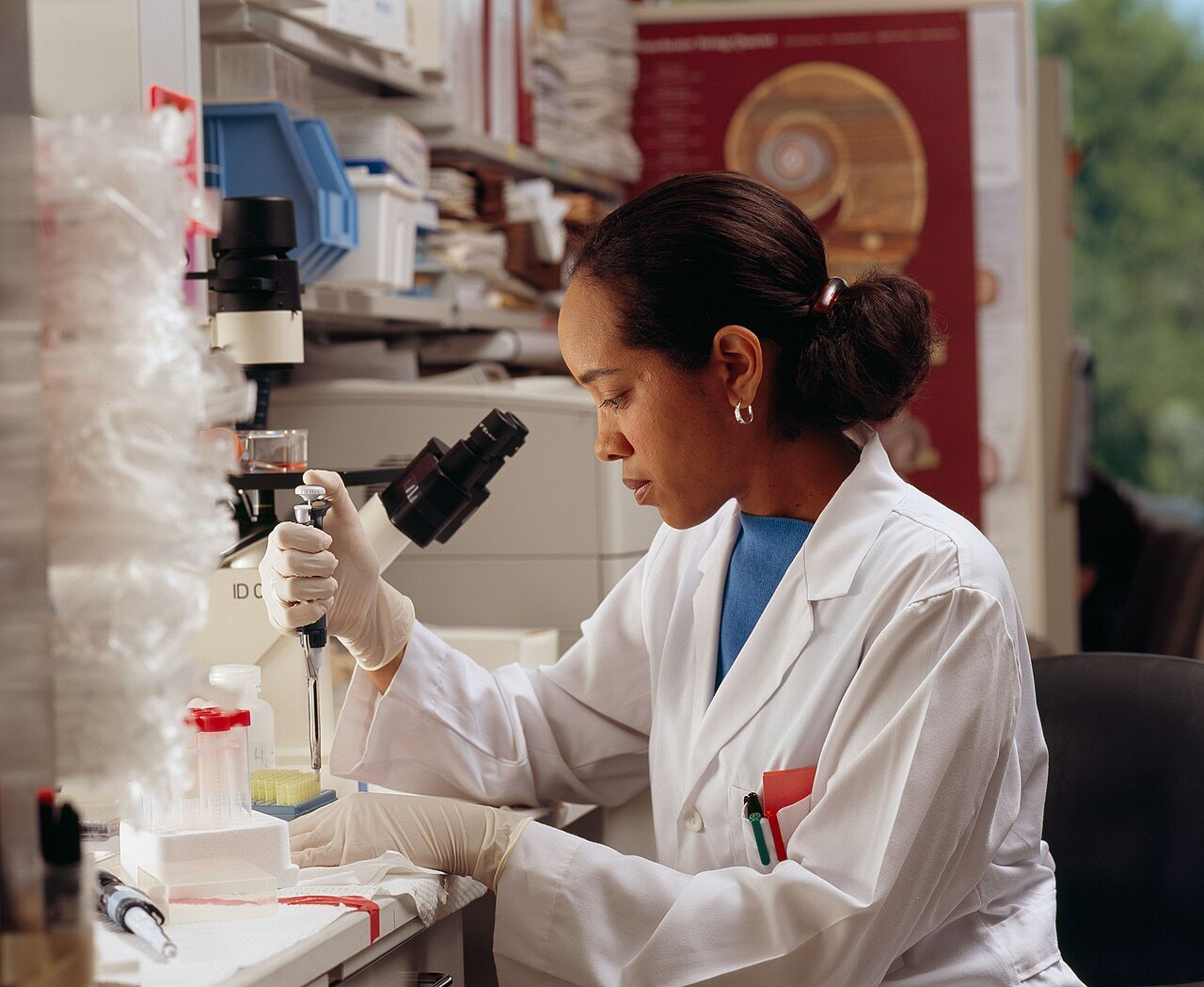
A National Cancer Institute researcher uses pipettes at a laboratory bench.

This division integrates biomedical discovery, clinical research, epidemiology, public health, mental health, health policy, rehabilitation, nursing, dentistry, and health technologies. It attends to local and global health needs while defending ethics, safety, and equity.

This division connects biomedical discovery with clinical reasoning, prevention, population health, and the design of equitable health systems. It recognizes that health is shaped by biology, environment, income, education, institutions, culture, and access to trustworthy care. Research may range from molecular mechanisms and diagnostics to clinical studies, epidemiology, mental health, rehabilitation, nursing, health economics, and policy. The division gives particular attention to conditions and populations that remain underrepresented in global evidence. Patient safety, informed consent, proportional ethics review, transparent reporting, privacy, community engagement, and the responsible evaluation of health technologies are treated as essential scientific standards rather than administrative additions.

Fields and scholarly sections

A broad disciplinary home with clear centres of expertise

Basic and translational medicineClinical sciencesPublic and population healthEpidemiology and biostatisticsMental health and neuroscienceHealth systems and policyNursing and allied healthDigital and precision health
Scope and intellectual field

A disciplinary home broad enough for discovery and precise enough for judgment

This division integrates biomedical discovery, clinical research, epidemiology, public health, mental health, health policy, rehabilitation, nursing, dentistry, and health technologies. It attends to local and global health needs while defending ethics, safety, and equity.

Within Medical & Health Sciences, fields such as Basic and translational medicine, Clinical sciences, Public and population health, Epidemiology and biostatistics are treated as connected areas of inquiry rather than isolated labels. The division gives specialists a recognizable home while making room for new combinations of theory, observation, experiment, computation, design, interpretation, and professional practice. Its role is not to prescribe one intellectual school, but to make standards of competence visible and to ensure that interdisciplinary work remains answerable to the disciplines on which it relies.

Research design and evidence

Questions determine methods and claims remain proportionate to evidence

A serious research programme begins by defining the object of inquiry, the relevant scale, the state of existing knowledge, and the form of evidence capable of changing a conclusion. Depending on the field, that may require experiments, longitudinal observation, archival interpretation, mathematical modelling, fieldwork, qualitative inquiry, engineering validation, comparative analysis, or a deliberate combination of approaches. The division expects methods to be described clearly enough for informed scrutiny and limitations to remain visible throughout interpretation and communication.

Research connected to Latin America should also explain place, history, institutions, language, ecology, and unequal access where these conditions shape the evidence. Regional relevance does not lower disciplinary standards; it often requires more exact contextual reasoning. Comparative or international work should identify what can legitimately be generalized, what remains specific, whose knowledge is represented, and how data, credit, responsibility, and long-term stewardship are distributed among collaborators.

Contribution across the Academy

Deep expertise becomes more useful when its boundaries and connections are understood

It helps the Academy connect scientific evidence to healthier lives, stronger systems, and responsible innovation.

Across the Academy, the division can convene peer review, identify reliable expertise, formulate research questions, mentor emerging scholars, and test the disciplinary foundations of shared projects. It may contribute to evidence reviews, methods notes, comparative studies, scholarly dialogues, or carefully governed public explanations. Any output should name its authors and reviewers, state the route by which it was developed, distinguish consensus from disagreement, and avoid suggesting institutional authority beyond the mandate actually granted.

Questions shaping the scholarly agenda

The division advances through questions that connect discovery evidence and consequence

Which biological mechanisms can be translated into safer prevention, diagnosis, and treatment?

How can health systems reduce avoidable differences in access, quality, and outcomes?

How should evidence be generated for diverse populations and settings that are often missing from research?

Which digital, genomic, and precision-health tools create real benefit, and under what safeguards?

Research practice and standards

Methods must be appropriate evidence must be inspectable and limits must remain visible

The division supports methodological pluralism within rigorous disciplinary standards. Choice of method should follow the research question; claims should remain proportionate to evidence; and collaboration should make responsibilities, data stewardship, authorship, uncertainty, and conflicts of interest explicit.

Methods and evidence

  • Biomedical and translational laboratory research
  • Clinical studies, epidemiology, biostatistics, and causal inference
  • Systematic review, implementation science, and health-technology assessment
  • Ethics, privacy, patient participation, and transparent reporting

Connections across the Academy

  • Biological mechanisms, microbiomes, and disease ecology
  • Medical devices, data science, and trustworthy AI
  • Behavior, education, inequality, and public institutions
  • Food, environment, work, and the social determinants of health
Contribution to the Academy

It helps the Academy connect scientific evidence to healthier lives, stronger systems, and responsible innovation.

See the Academy’s shared research priorities

In depth

From a health question to evidence people can use

A health research question becomes meaningful when it identifies the people, setting, comparison, and outcome involved. A change in a laboratory marker, an improvement in daily functioning, and a reduction in the time needed to obtain care are different achievements. Each requires an appropriate design and interpretation. Research priorities are therefore stronger when patients, caregivers, practitioners, and communities can explain which experiences deserve measurement and which burdens an apparently successful intervention might overlook.

The division's intellectual territory includes mechanisms of illness and recovery, but also the organization of care and the distribution of its benefits. Why does a promising intervention perform differently between settings? At what point does a referral pathway lose people? Which obstacles arise from information, cost, distance, communication, or institutional practice? These questions connect individual experience with population patterns while resisting the assumption that a single average outcome describes every person's circumstances or captures every relevant dimension of wellbeing.

Read the complete essay