Academic Division 05

Engineering, Technology & Computer Sciences

Transforming knowledge into resilient systems, responsible technologies, and solutions for society.

05 / 08
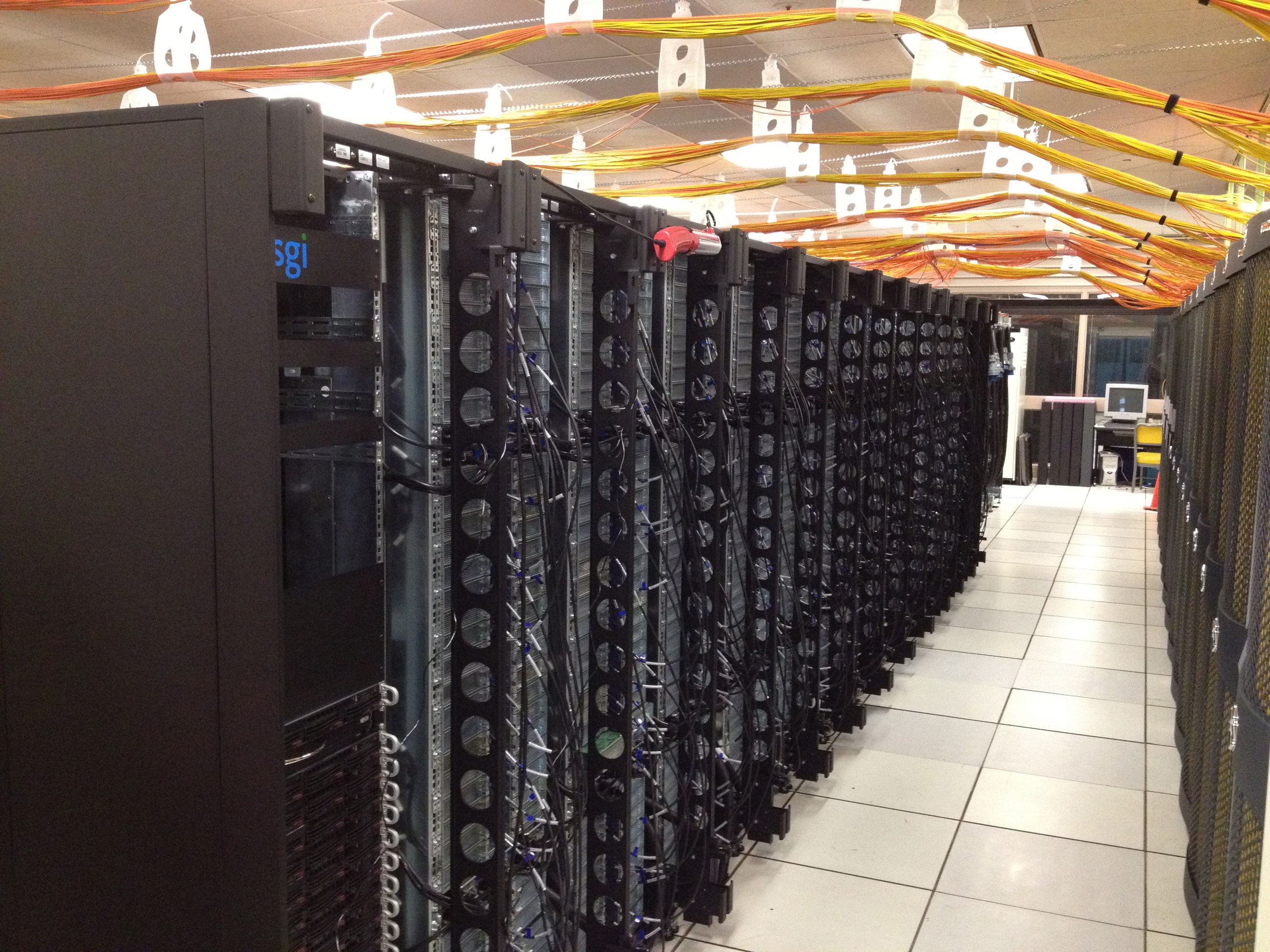
Internal computing racks and overhead cabling of NASA’s Pleiades supercomputer, pictured during its 2012 upgrade.

The division spans civil, mechanical, electrical, chemical, industrial, and environmental engineering; computer science; data science; artificial intelligence; robotics; energy; communications; manufacturing; and infrastructure. It combines technical excellence with safety, ethics, and social purpose.

This division examines how scientific and technical knowledge becomes infrastructure, machines, software, energy systems, materials, and services on which society can depend. Engineering quality is understood through performance, safety, maintainability, resilience, environmental cost, and public consequence—not novelty alone. The division spans established engineering disciplines and fast-moving fields such as artificial intelligence, robotics, autonomous systems, cybersecurity, digital infrastructure, and advanced manufacturing. It encourages design grounded in Latin American operating conditions, including geographic complexity, unequal access, informal systems, limited maintenance capacity, and exposure to hazards. Responsible innovation requires testing, documentation, human oversight, lifecycle thinking, and the ability to withdraw or redesign a system when evidence reveals harm.

Fields and scholarly sections

A broad disciplinary home with clear centres of expertise

Civil and structural engineeringMechanical and aerospace systemsElectrical and electronic engineeringComputer science and AIData and information scienceEnergy and environmental engineeringIndustrial systems and manufacturingRobotics and autonomous systems
Scope and intellectual field

A disciplinary home broad enough for discovery and precise enough for judgment

The division spans civil, mechanical, electrical, chemical, industrial, and environmental engineering; computer science; data science; artificial intelligence; robotics; energy; communications; manufacturing; and infrastructure. It combines technical excellence with safety, ethics, and social purpose.

Within Engineering, Technology & Computer Sciences, fields such as Civil and structural engineering, Mechanical and aerospace systems, Electrical and electronic engineering, Computer science and AI are treated as connected areas of inquiry rather than isolated labels. The division gives specialists a recognizable home while making room for new combinations of theory, observation, experiment, computation, design, interpretation, and professional practice. Its role is not to prescribe one intellectual school, but to make standards of competence visible and to ensure that interdisciplinary work remains answerable to the disciplines on which it relies.

Research design and evidence

Questions determine methods and claims remain proportionate to evidence

A serious research programme begins by defining the object of inquiry, the relevant scale, the state of existing knowledge, and the form of evidence capable of changing a conclusion. Depending on the field, that may require experiments, longitudinal observation, archival interpretation, mathematical modelling, fieldwork, qualitative inquiry, engineering validation, comparative analysis, or a deliberate combination of approaches. The division expects methods to be described clearly enough for informed scrutiny and limitations to remain visible throughout interpretation and communication.

Research connected to Latin America should also explain place, history, institutions, language, ecology, and unequal access where these conditions shape the evidence. Regional relevance does not lower disciplinary standards; it often requires more exact contextual reasoning. Comparative or international work should identify what can legitimately be generalized, what remains specific, whose knowledge is represented, and how data, credit, responsibility, and long-term stewardship are distributed among collaborators.

Contribution across the Academy

Deep expertise becomes more useful when its boundaries and connections are understood

It advances digital transformation, infrastructure resilience, clean energy, trustworthy AI, and technology that serves people and planet.

Across the Academy, the division can convene peer review, identify reliable expertise, formulate research questions, mentor emerging scholars, and test the disciplinary foundations of shared projects. It may contribute to evidence reviews, methods notes, comparative studies, scholarly dialogues, or carefully governed public explanations. Any output should name its authors and reviewers, state the route by which it was developed, distinguish consensus from disagreement, and avoid suggesting institutional authority beyond the mandate actually granted.

Questions shaping the scholarly agenda

The division advances through questions that connect discovery evidence and consequence

How can infrastructure remain safe and functional under climate, seismic, financial, and institutional stress?

What makes an algorithmic or autonomous system trustworthy in real operating environments?

Which energy, materials, and production pathways reduce total lifecycle impacts rather than shifting them elsewhere?

How can digital transformation improve capability without deepening exclusion, dependency, or surveillance?

Research practice and standards

Methods must be appropriate evidence must be inspectable and limits must remain visible

The division supports methodological pluralism within rigorous disciplinary standards. Choice of method should follow the research question; claims should remain proportionate to evidence; and collaboration should make responsibilities, data stewardship, authorship, uncertainty, and conflicts of interest explicit.

Methods and evidence

  • Requirements analysis, design, prototyping, and verification
  • Modelling, simulation, reliability analysis, and stress testing
  • Field trials, human-factors evaluation, and post-deployment monitoring
  • Open technical documentation, cybersecurity, and lifecycle assessment

Connections across the Academy

  • Foundational science, materials, and measurement
  • Health technologies, assistive systems, and public safety
  • Agriculture, water, energy, logistics, and cities
  • Law, labour, ethics, governance, and technology assessment
Contribution to the Academy

It advances digital transformation, infrastructure resilience, clean energy, trustworthy AI, and technology that serves people and planet.

See the Academy’s shared research priorities

In depth

Designing systems that remain useful in the world

An engineering question asks what a system must accomplish under specified constraints, and why an existing approach cannot accomplish it adequately. Increasing speed may consume more energy; adding redundancy may complicate maintenance; improving average prediction may leave rare failures unresolved. These are research questions when the relationships are uncertain and competing designs can be compared. A requirement becomes useful when it identifies operating conditions, a measurable threshold, and the consequences of falling short.

Computer science adds questions about representation, computability, information, and the resources needed to solve a problem. A method that performs well on a fixed benchmark may rely on information unavailable in actual operation. A technically valid output may also be unusable if people cannot interpret or challenge it. The intellectual task is therefore to connect formal properties, measured performance, and human use without allowing success on one dimension to stand in for evidence about every other dimension.

Read the complete essay