
Academic Division 06

Agricultural, Food & Veterinary Sciences

Building resilient food systems through agricultural science, nutrition, animal health, biodiversity, and responsible innovation.

06 / 08
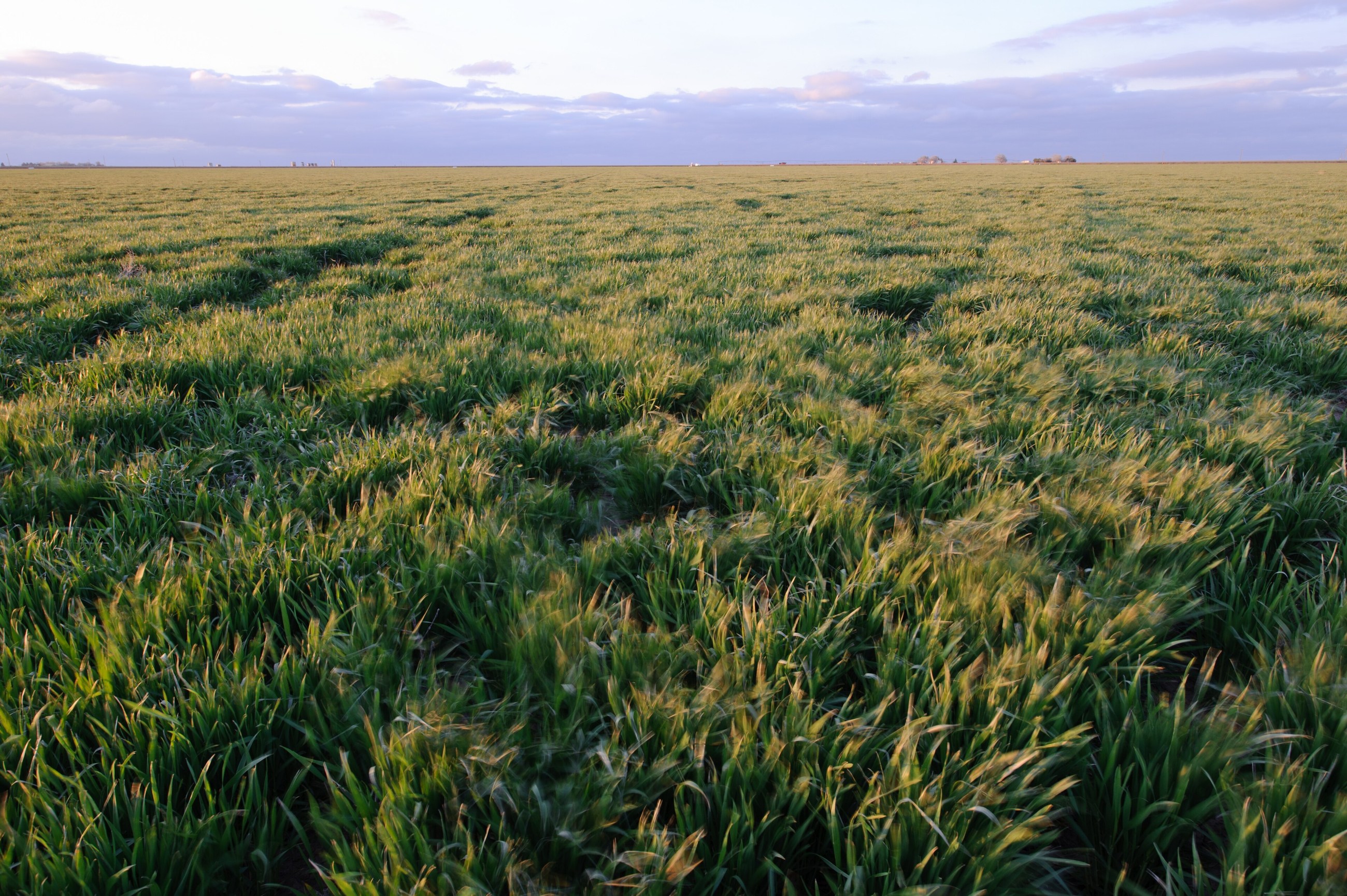
A wheat field near Wilson, Texas, photographed for the USDA Natural Resources Conservation Service.

The division brings together crop science, soil science, forestry, fisheries, animal science, veterinary medicine, food technology, nutrition, agricultural economics, rural development, and the bioeconomy. Its perspective extends from field and watershed to value chain and public health.

This division studies food and biological production as linked systems of soil, water, climate, crops, forests, fisheries, animals, microorganisms, labour, markets, nutrition, and culture. Its perspective reaches from genes and farms to watersheds, landscapes, supply chains, households, and public health. Latin America is both a major centre of agrobiodiversity and a globally significant producer, making questions of resilience, equity, land stewardship, and value distribution especially important. The division supports fundamental and applied science while recognizing the knowledge of farmers, fishers, rural communities, and Indigenous peoples. One Health, animal welfare, food safety, nutritional quality, traceability, and the responsible use of biotechnology are integral to scientific excellence.

Fields and scholarly sections

A broad disciplinary home with clear centres of expertise

Crop and soil scienceForestry and agroforestryAnimal and veterinary scienceFood science and nutritionFisheries and aquacultureAgricultural economicsRural innovationBioeconomy and natural resources
Scope and intellectual field

A disciplinary home broad enough for discovery and precise enough for judgment

The division brings together crop science, soil science, forestry, fisheries, animal science, veterinary medicine, food technology, nutrition, agricultural economics, rural development, and the bioeconomy. Its perspective extends from field and watershed to value chain and public health.

Within Agricultural, Food & Veterinary Sciences, fields such as Crop and soil science, Forestry and agroforestry, Animal and veterinary science, Food science and nutrition are treated as connected areas of inquiry rather than isolated labels. The division gives specialists a recognizable home while making room for new combinations of theory, observation, experiment, computation, design, interpretation, and professional practice. Its role is not to prescribe one intellectual school, but to make standards of competence visible and to ensure that interdisciplinary work remains answerable to the disciplines on which it relies.

Research design and evidence

Questions determine methods and claims remain proportionate to evidence

A serious research programme begins by defining the object of inquiry, the relevant scale, the state of existing knowledge, and the form of evidence capable of changing a conclusion. Depending on the field, that may require experiments, longitudinal observation, archival interpretation, mathematical modelling, fieldwork, qualitative inquiry, engineering validation, comparative analysis, or a deliberate combination of approaches. The division expects methods to be described clearly enough for informed scrutiny and limitations to remain visible throughout interpretation and communication.

Research connected to Latin America should also explain place, history, institutions, language, ecology, and unequal access where these conditions shape the evidence. Regional relevance does not lower disciplinary standards; it often requires more exact contextual reasoning. Comparative or international work should identify what can legitimately be generalized, what remains specific, whose knowledge is represented, and how data, credit, responsibility, and long-term stewardship are distributed among collaborators.

Contribution across the Academy

Deep expertise becomes more useful when its boundaries and connections are understood

It links scientific excellence with food security, rural livelihoods, One Health, sustainable production, and stewardship of natural resources.

Across the Academy, the division can convene peer review, identify reliable expertise, formulate research questions, mentor emerging scholars, and test the disciplinary foundations of shared projects. It may contribute to evidence reviews, methods notes, comparative studies, scholarly dialogues, or carefully governed public explanations. Any output should name its authors and reviewers, state the route by which it was developed, distinguish consensus from disagreement, and avoid suggesting institutional authority beyond the mandate actually granted.

Questions shaping the scholarly agenda

The division advances through questions that connect discovery evidence and consequence

How can crops, livestock, forests, and aquatic systems remain productive under climate and ecological stress?

Which soil, water, and landscape practices restore rather than deplete natural capital?

How can animal, human, and ecosystem health be governed as one connected system?

How should value chains improve nutrition, safety, livelihoods, traceability, and fair returns to producers?

Research practice and standards

Methods must be appropriate evidence must be inspectable and limits must remain visible

The division supports methodological pluralism within rigorous disciplinary standards. Choice of method should follow the research question; claims should remain proportionate to evidence; and collaboration should make responsibilities, data stewardship, authorship, uncertainty, and conflicts of interest explicit.

Methods and evidence

  • Field trials, breeding, soil and water measurement, and farm-system experiments
  • Veterinary, microbiological, nutritional, and food-safety laboratory analysis
  • Participatory research with producers and rural communities
  • Remote sensing, value-chain analysis, lifecycle assessment, and agricultural economics

Connections across the Academy

  • Biodiversity, genetics, ecosystems, and biological resources
  • Climate, soils, water, hazards, and landscape change
  • Nutrition, zoonoses, food safety, and population health
  • Rural development, markets, infrastructure, culture, and public policy
Contribution to the Academy

It links scientific excellence with food security, rural livelihoods, One Health, sustainable production, and stewardship of natural resources.

See the Academy’s shared research priorities

In depth

Following evidence from production to nourishment

A higher harvest can be an important outcome without answering every question about a production system. Researchers may also need to examine yield stability, soil condition, labour, animal welfare, food quality, and the distribution of costs. The relevant question is what is being improved, over which period, and for whom. Comparing systems fairly requires a common basis: per unit of land, product, nutrient, income, or another clearly justified measure suited to the decision.

Agricultural, food, and veterinary inquiry connects biological processes with deliberate management. It asks how genotype, environment, and practice interact; how animal health relates to housing and handling; and how processing changes the characteristics of a food. A finding at one stage can have consequences elsewhere in the chain. This makes the boundary of the study an intellectual choice: researchers must decide which upstream inputs and downstream outcomes belong within an explanation and which remain outside it.

Read the complete essay